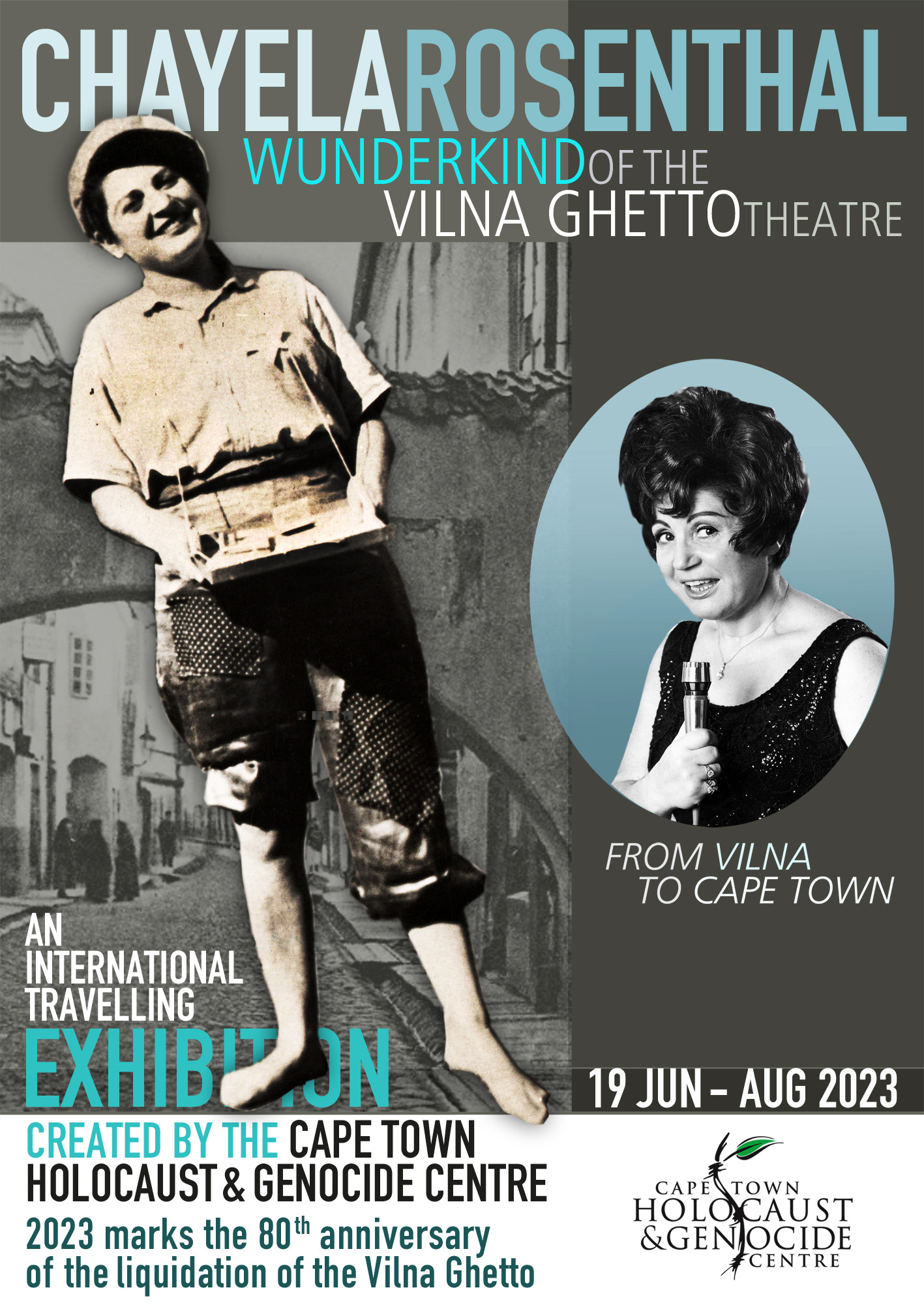
In June, 2023, the travelling exhibition Chayela – Wunderkind of the Vilna Ghetto will open at the Cape Town Holocaust & Genocide Centre in South Africa. The exhibition was conceptualized and developed by the CT Holocaust & Genocide Centre, and the launch will coincide with the 80th anniversary of the liquidation of the Vilna Ghetto by the Nazis in 1943.
Amongst the Holocaust survivors, was Vilna born Yiddish Actress and singing star of the Vilna Ghetto Theatre, Chayela Rosenthal. After having survived the Vilna Ghetto, Kaiserwald Labour camp, Stutthof concentration camp and a death march to the Baltic Sea, Chayela married fellow survivor Xavier Piatka, and went on to have a remarkable international career in Yiddish theatre on Broadway and all around the world, with many stars of stage and screen. She made her home in Cape Town, South Africa, where she and Xavier had two daughters who continued their parents’ legacy.
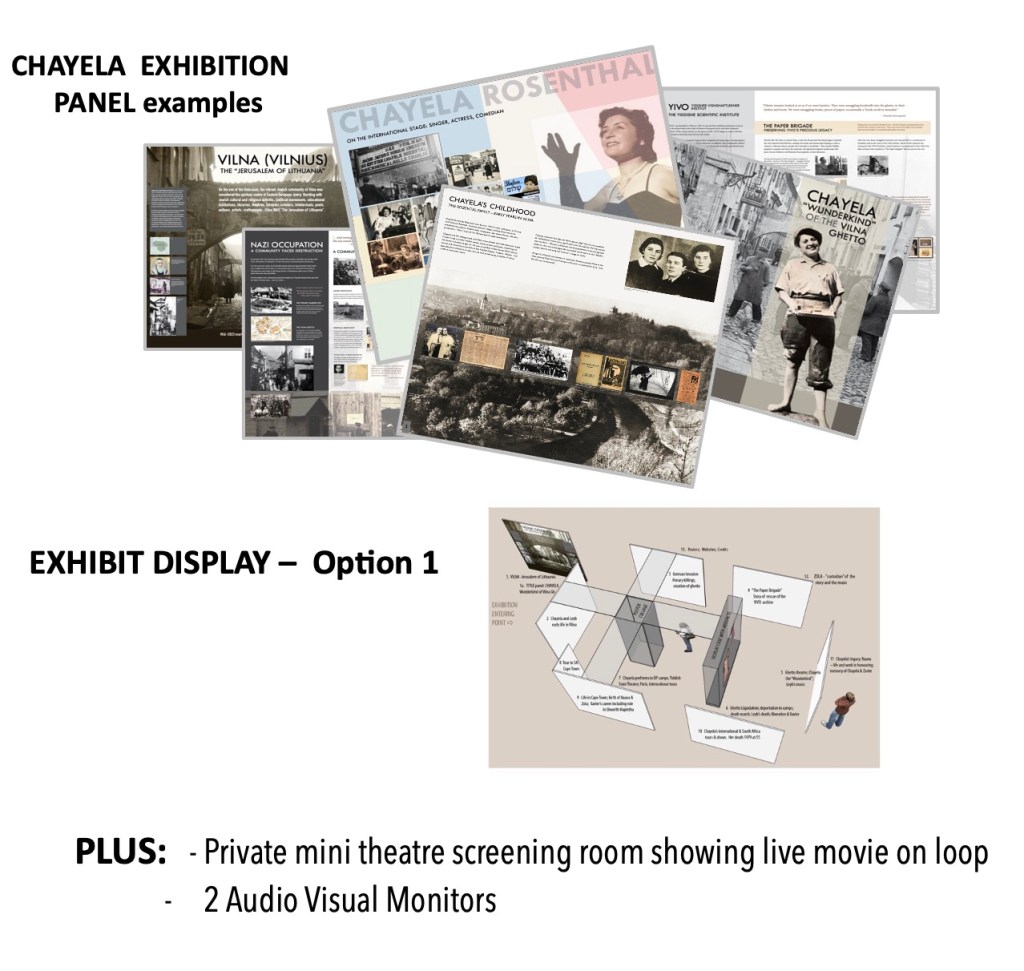
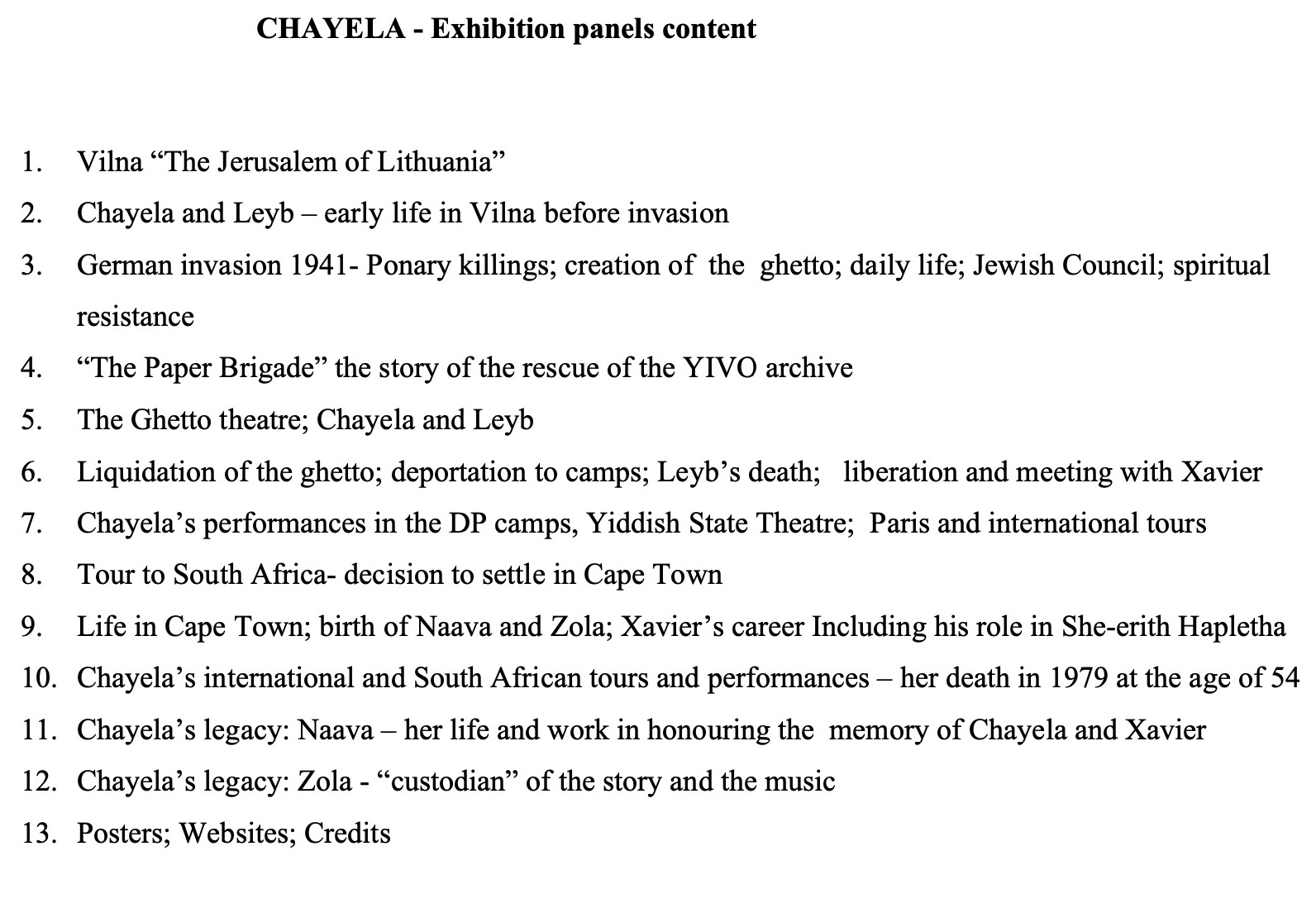
Against the backdrop of Vilna, “the Jerusalem of Lithuania”, the exhibition will explore Chayela’s pre-war life and her extraordinary tale of survival and resistance through her music, and that of her brother, the poet and composer Leyb Rozental, a member of The Paper Brigade, who was murdered in the Klooga camp. The exhibition will also explore the connections to YIVO, and Chayela’s post war career and enormous contribution to Yiddish theatre internationally. Finally, the exhibition will also show how Xavier and their daughters, Zola and Naava, continued the legacy of Chayela, after her untimely death at the age of 54.
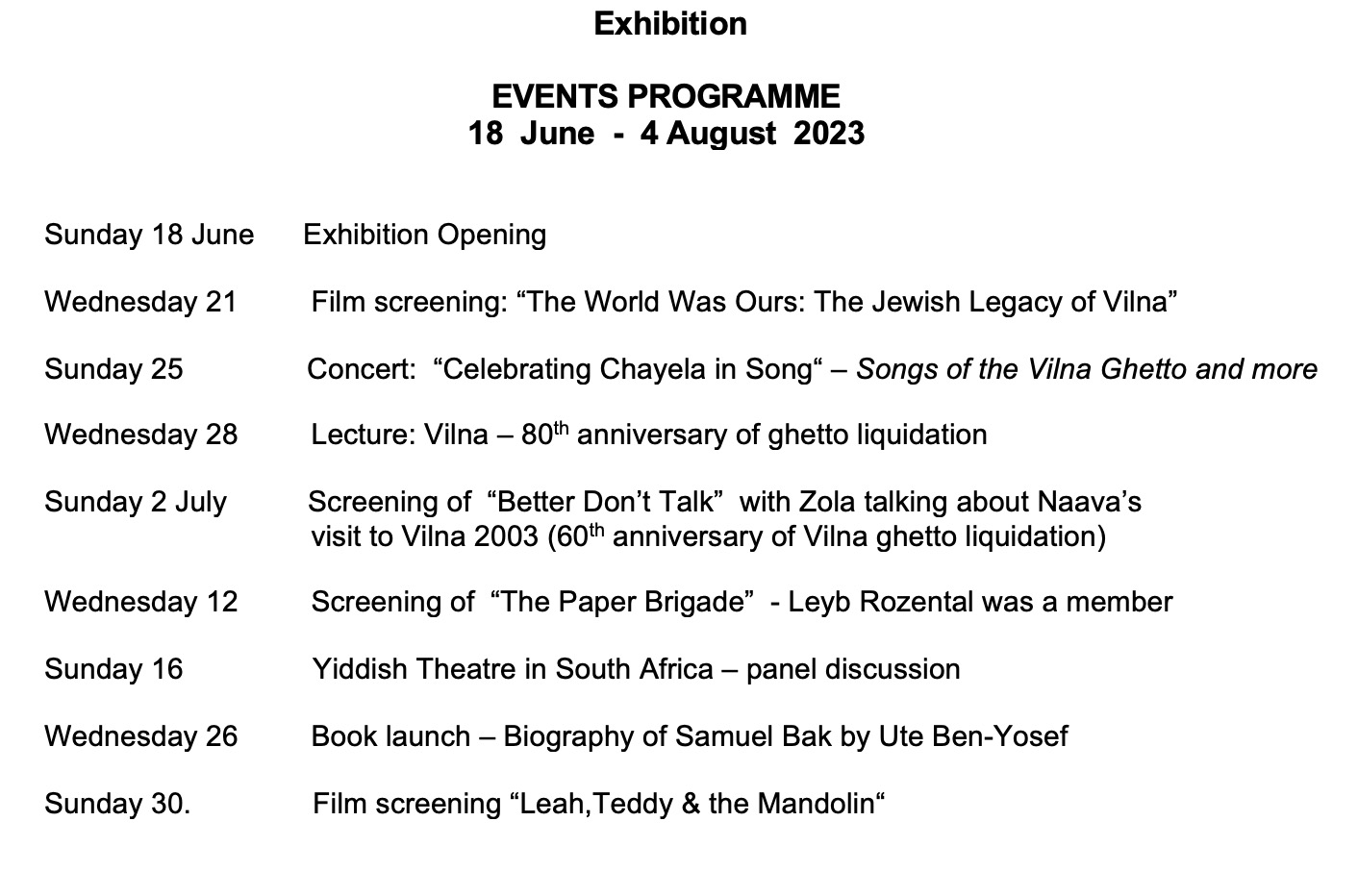
The exhibition will be accompanied by an ancillary programme of performances (including by Zola, Chayela’s daughter), film screenings, lectures and educational programmes.
PLEASE CONSIDER MAKING A DONATION / FUNDING / SPONSORSHIP
Thank You!
or call Suraya on +27828787707 (via “Whatsapp” is free)
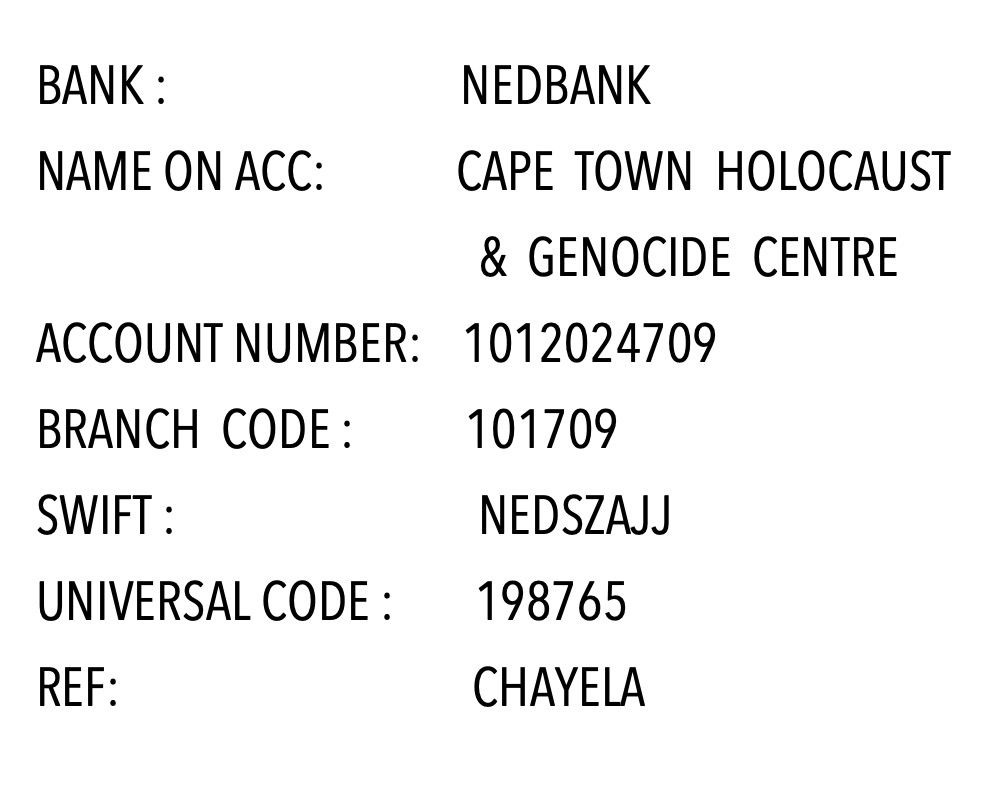
FOR BANK TRANSACTIONS OUTSIDE OF SOUTH AFRICA USE DETAILS BELOW:

PLEASE CONSIDER MAKING A DONATION / FUNDING / SPONSORSHIP
This exhibition teaches many lessons at it shares important history, the legacy of the rich Jewish Culture and also about the powerful spiritual resistance shown by inmates of the Vilna Ghetto in the determination to continue producing music, art and theatre despite the personal losses, death, humiliation, trauma and suffering the inmates experienced.
 Chayela Rosenthal